Greater weever
Trachinus draco
Recommended
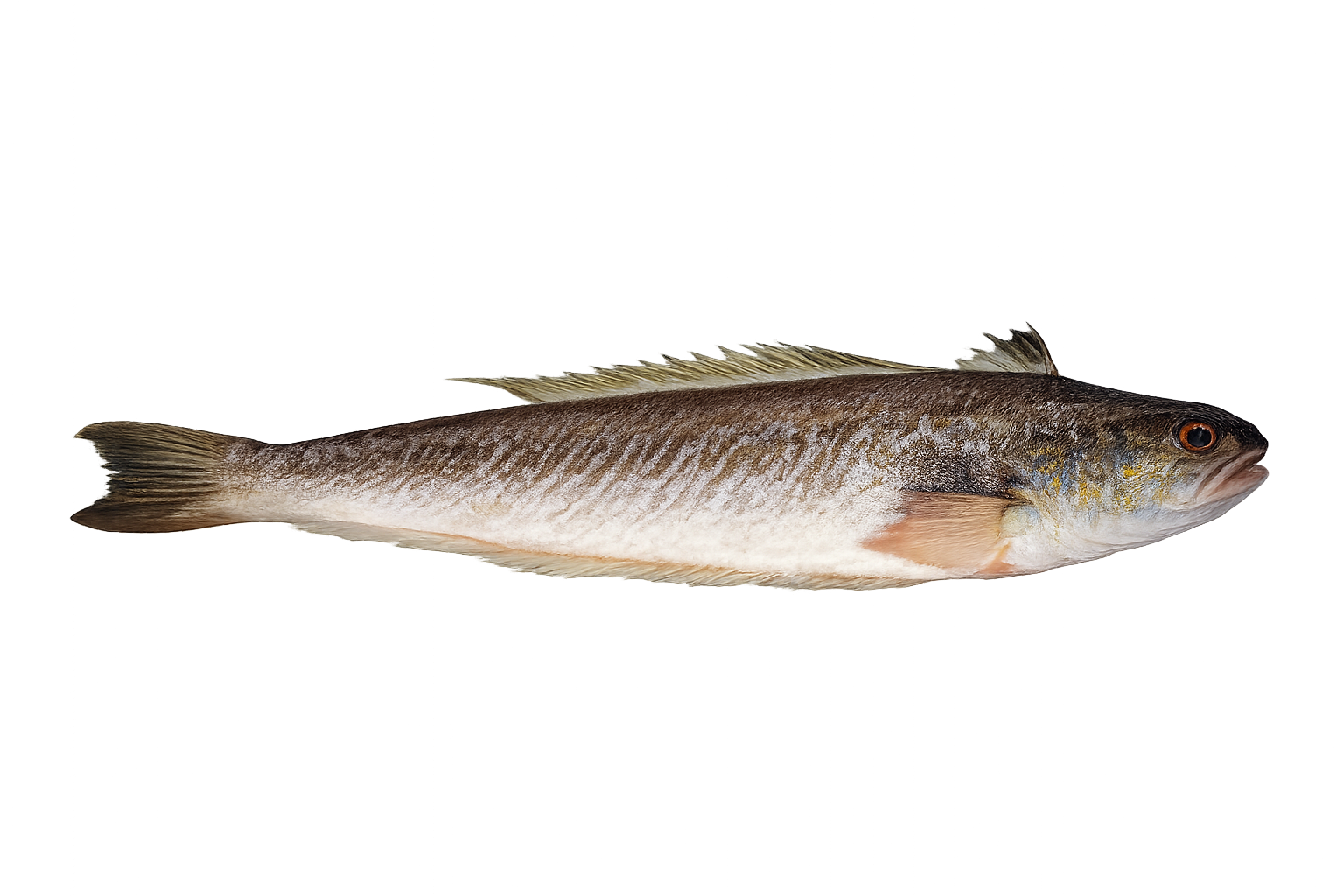
The Greater weever, which looks a bit like a dragon, is found native and abundant in our waters. The length of this fish usually ranges between 15 and 30 centimeters, although it sometimes exceeds 40 centimeters. The species’ breeding season takes place during the spring months and may extend until the end of summer. It is rarely targeted and is usually caught accidentally using static nets, spearguns, longlines, vertical lines and bottom trawls. By choosing this fish you could help support fishing communities to make more of their catch and fish sustainably.
It is a benthic species that lives quite close to the seabed and is frequently found along the coast of Cyprus. It is mainly found on sandy and muddy seabeds, at depths ranging from 1 to 150 meters. It feeds mainly on small invertebrates and fish and hunts at night, mostly by camouflaging itself in the sand with only its head exposed.
Its first dorsal fin consists of five hard spines, which have venom glands at their bases. In addition to the venomous dorsal fin they also have two equally venomous spines on their sides, one on each gill cover. Due to its venom and its looks it is avoided for consumption, although when it is cleaned it poses no threat to humans.
Bottom trawling is one of the most harmful ways to fish in our seas, as it drags heavy gear across the seabed, damaging all kinds of habitats, killing benthic life and leading to high catches of non-targeted species. In the southern part of Cyprus there is a restriction for trawling during the 16th of February and the 31st of May, and in the northern part bottom trawling is altogether banned.
Check that your fish has not been spearfished. It is recommended to ask your fisher or fishmonger where the fish was caught and with which fishing method, preferring bottom longlines, as well as buying this species outside of its spawning period. Prefer locally harvested seafood products by coastal small-scale fisheries.