Two-banded seabream
Diplodus vulgaris
Recommended
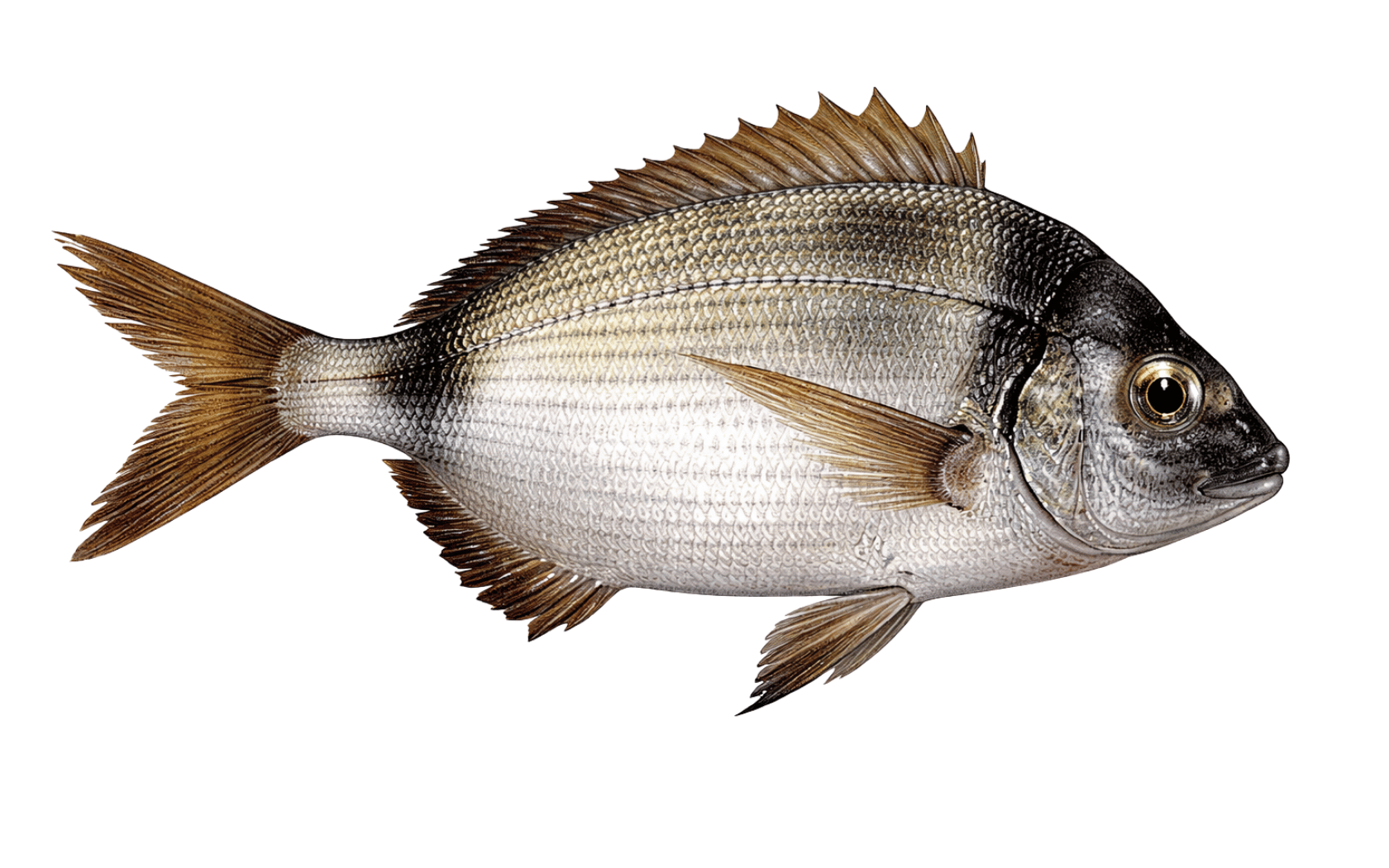
The Two-banded seabream is native to our waters although fished scarcely. Its spawning season begins in December and ends in January. It is mainly caught using longlines, static nets, trammel nets, bottom trawls, rods, and spearguns. EU regulations set the minimum catch size for this species at 18 cm.
It is a benthic species found primarily over rocky and mixed substrates, but also in Posidonia oceanica meadows, at depths ranging from 1 to around 160 meters. It feeds mainly on small crustaceans, mollusks, worms, and other benthic invertebrates. The Two-banded seabream is a hermaphroditic protandrous species, reaching sexual maturity first as a male at around 17 centimeters in length. As individuals grow larger, they may change sex and become females, depending on the ratio of males to females within the local population.
Bottom trawling is one of the most harmful fishing methods in our seas, as it drags heavy gear across the seabed, damaging habitats, killing benthic organisms, and resulting in high catches of non-target species. In the southern part of Cyprus, bottom trawling is restricted between 16 February and 31 May, while in the northern part it is prohibited altogether.
It is recommended to ask your fisher or fishmonger where the fish was caught and with which fishing method, as well as buying this species outside of its spawning period. Prefer locally harvested seafood products by coastal small-scale fisheries and make sure your fish adheres to EU minimum size regulations.