Dusky
Epinephelus marginatus
Avoid
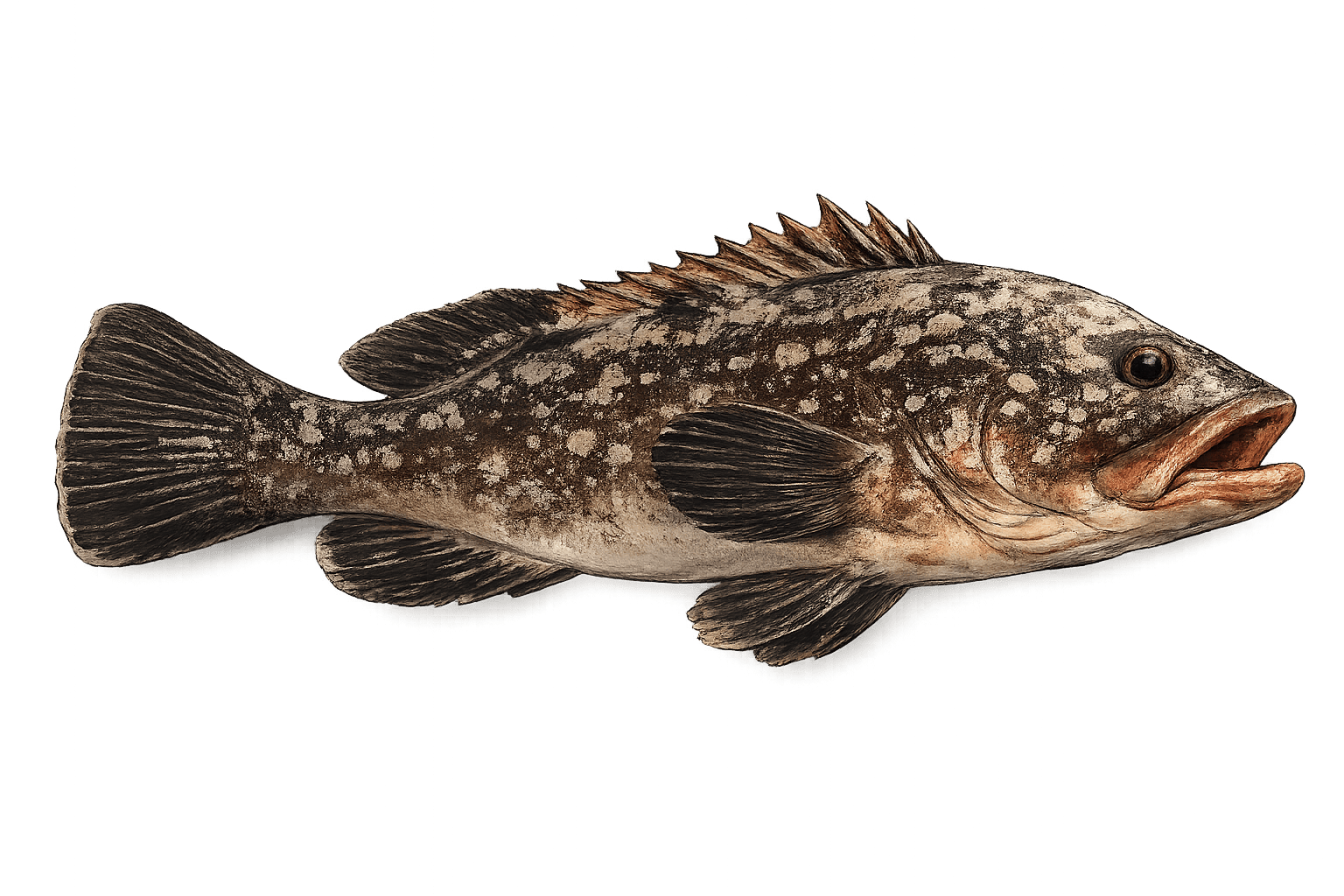
Dusky groupers are overfished in our waters. This large fish matures at the age of five and so maintaining its numbers while being overfished is hard for it. It can grow over 1 meter in length and weigh more than 30 kilograms. It is fished using thick longline, vertical lines, bottom trawls, traps and more rarely static gillnets, but is also subject to illegal spearfishing. EU regulations set a minimum fishing length of 45 cm.
The species is classified as Vulnerable in the Mediterranean assessment of the IUCN Red List. It is a fairly long-lived species, as it can live for more than 50 years. Its late maturity and low offspring numbers place it in a vulnerable position, compared to other fish in the sea. Apart from that, due to its size and longevity it often bioaccumulates toxic substances. Taking all the above into consideration it is recommended to avoid this fish.
It hunts its prey mainly by lying in wait near its den. Its diet consists primarily of fish, cephalopods (octopuses, cuttlefish, squid), and crustaceans (crabs, shrimp, etc.). The dusky grouper is a hermaphroditic protogynous species. Females reach sexual maturity at around 5 years of age, and males at around 15 years of age.
Bottom trawling is one of the most harmful ways to fish in our seas, as it drags heavy gear across the seabed, damaging all kinds of habitats, killing benthic life and leading to high catches of non-targeted species. In the southern part of Cyprus there is a restriction for trawling during the 16th of February and the 31st of May, and in the northern part bottom trawling is altogether banned.
Make sure your fish is not shot in the head to avoid the support of illegal fishing. It is recommended to ask your fisher or fishmonger where the fish was caught and with which fishing method, as well as buying this species outside of its spawning period. Prefer locally harvested seafood products by coastal small-scale fisheries and make sure your fish adheres to EU minimum size regulations.