Striped red mullet
Mullus surmuletus
Caution
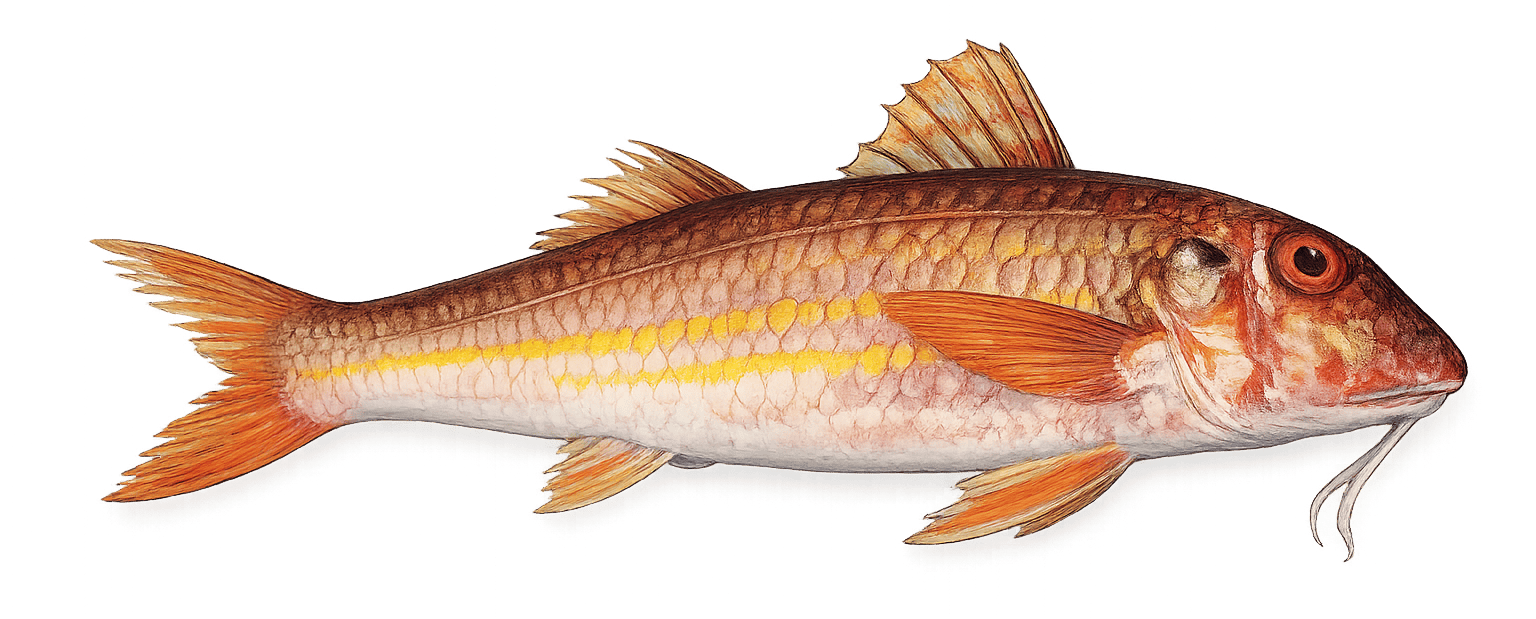
The striped red mullet population is depleted in the Cypriot waters and in recent years its population has severely depleted due to various factors including overfishing, climate change and invasive species. It spawns during May, June and July. It is caught using bottom trawling and static nets, usually trammel nets with short soak durations. EU Mediterranean regulations set a minimum landing size of 11 cm (total length) for striped red mullet.
The Striped red mullet is found on rocky, sandy, or muddy bottoms, usually at depths of up to 100 meters. It is usually 20 to 25 centimeters long, though it can grow up to 40 centimeters. The red mullet searches for food on the seabed with the help of its barbels, which are equipped with taste receptors. It feeds on benthic microorganisms, such as shrimp, amphipods, polychaetes, mollusks, and small fish.
Bottom trawling is one of the most harmful ways to fish in our seas, as it drags heavy gear across the seabed, damaging all kinds of habitats, killing benthic life and leading to high catches of non-targeted species. In the southern part of Cyprus there is a restriction for trawling during the 16th of February and the 31st of May, and in the northern part bottom trawling is altogether banned. Trammel nets can have high non-target catch rates resulting in bycatch of vulnerable species such as sea turtles. However, soak times for striped red mullet are usually low resulting in high survival.
It is recommended to ask your fisher or fishmonger where the fish was caught and with which fishing method, as well as buying this species outside of its spawning period. Prefer locally harvested seafood products by coastal small-scale fisheries and make sure your fish adheres to EU minimum size regulations.